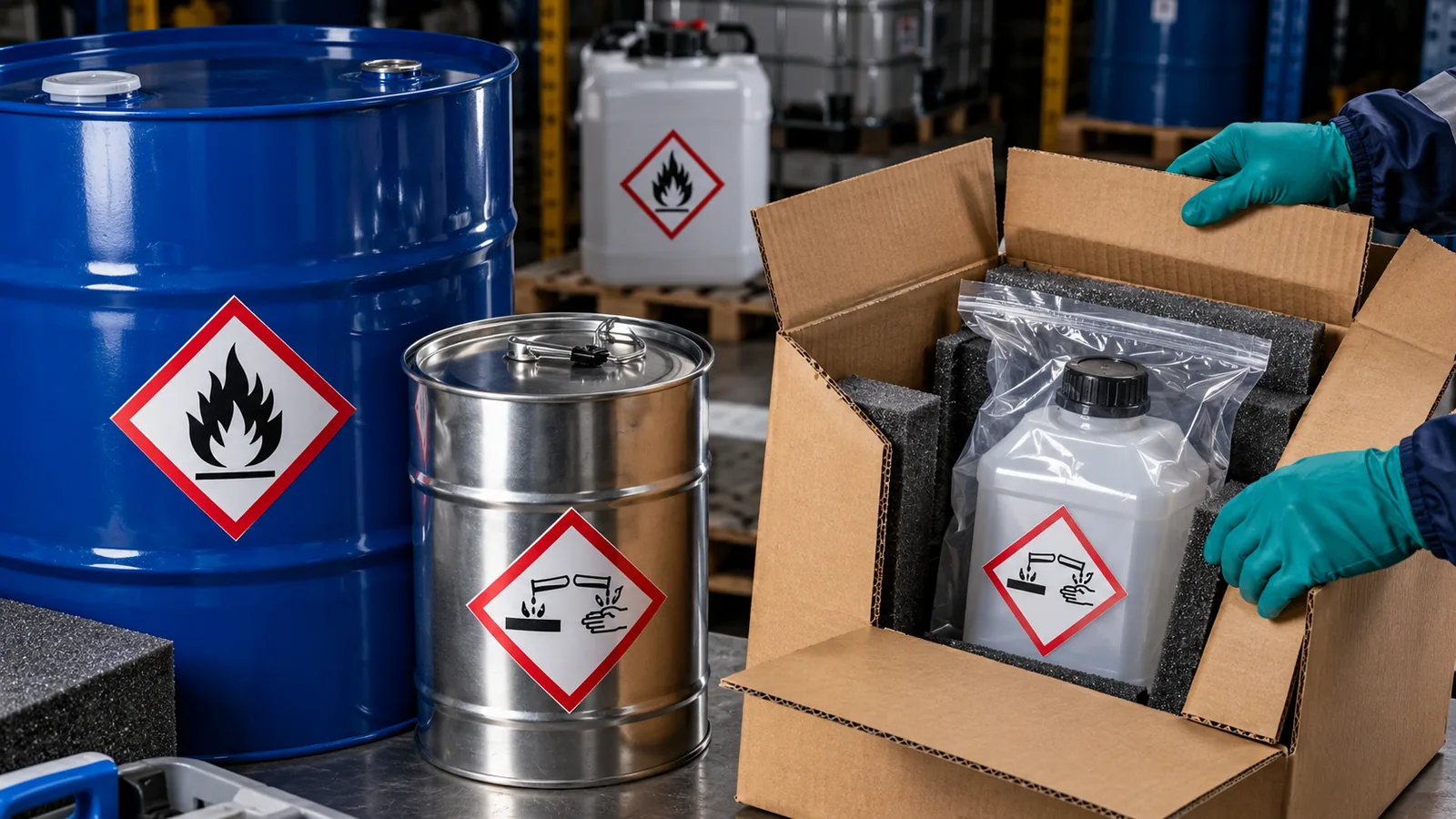
Metal Cans for Coatings and Chemicals: Matching the Can to the Contents


The can is the right size. The lid fits. The price meets your target. But will the package protect your product through filling, storage, shipping and use?
For coatings and chemicals, that answer depends on details a purchase order can easily overlook: the specific interior coating, the closure components, the filling conditions and any applicable hazardous materials requirements.
A description such as “quart paint can” is a starting point, not a finished specification. This guide explains what to confirm before comparing quotes or committing to production quantities.
Start With the Product and the Process
Before choosing a container, bring together the information your packaging supplier needs to evaluate the application:
- Product formulation, including the solvent system, pH and potentially corrosive ingredients
- Fill temperature and filling method
- Required capacity and fill volume
- How the customer will open, dispense and reclose the package
- Expected shelf life and storage conditions
- Hazardous materials transportation classification, if applicable
- Order quantities, delivery locations and required timing
The goal is to define the application before narrowing the options. Two products sold as industrial coatings may need different packaging because their formulations, dispensing methods or shipping requirements differ.
Involve your technical, operations and hazardous materials teams early. Packaging selection works best when product compatibility, line performance and transportation requirements are considered together, rather than checked after a container has already been selected.
Choose a Format That Fits Filling and Dispensing
Container shape affects more than appearance. The opening, closure, handle and dimensions all influence how a package moves through production and how customers use it.
Use the following formats as a starting point for discussions with your supplier. Confirm the actual construction and dimensions against a product drawing rather than relying on the format name alone.
Some names describe a shape; others describe the top or closure arrangement. Supplier terminology can overlap, so the drawing and component specifications should guide the final decision.
Also confirm how the proposed package will run on your line. A change in footprint, height, handle position or closure may affect conveying, filling, labeling and case packing.
Specify the Interior Lining, Not Just “Lined”
The interior lining helps separate the product from the metal. Selecting it requires more than knowing whether the contents are paint, adhesive or solvent. Novvia’s coatings packaging guidance identifies formulation compatibility and specialized linings or closure systems as important parts of package selection.
“Lined” tells you that an interior coating is present. It does not identify the coating or establish that it is suitable for your product.
Match the Lining to the Actual Formulation
Ask your supplier to identify the proposed interior coating and explain the basis for recommending it. The review should address:
- The complete formulation, not just the broad product category
- Fill temperature and processing conditions
- Expected storage duration and temperature range
- Product contact with the body, seams, lid and closure components
- Available compatibility information and any additional testing needed
Avoid treating a coating family name as a compatibility guarantee. The specific coating system and the conditions of use matter.
The same applies to unlined cans. An unlined option should be selected because it is suitable for the application, not because the specification left the lining undecided.
Evaluate the Filled Package
Before approving production quantities, agree on a sample evaluation with your technical team and packaging supplier.
Use the actual product and the intended closure components. Define the storage conditions, evaluation period and acceptance criteria before the trial begins.
Depending on the application, the evaluation may include:
- Corrosion or discoloration
- Lining softening, blistering or loss of adhesion
- Leakage or changes in closure performance
- Changes in product appearance, odor or performance
- Dispensing and reclosure performance
An empty-can inspection cannot establish how the filled package will perform over its intended shelf life. Treat compatibility evaluation as a separate approval step, not an assumption built into the container quote.
Confirm Hazardous Materials Requirements Early
If the contents are regulated for transportation, determine the applicable packaging requirements before finalizing the container.
Some shipments require UN specification packaging, often described commercially as “UN-rated.” The requirement depends on the product’s classification and the applicable shipping provisions, including quantity and mode of transportation. Your hazardous materials compliance team should make that determination.
A UN Marking Is Not a Universal Approval
Under 49 CFR 178.601, packaging manufacturers must successfully complete design qualification testing for new or different packaging designs and conduct periodic retesting. The regulation also addresses package assembly responsibilities, including final closure.
The practical point: a UN marking relates to a qualified packaging design and its performance level. It does not establish that the package is suitable for every chemical or shipping configuration.
Before ordering, confirm:
- Whether the shipment requires specification packaging
- Which packaging design and performance level apply
- Whether the can is used as a single packaging or as part of a combination package
- Which lids, gaskets, caps and other components are specified
- What manufacturer closing instructions must be followed
- Whether proposed component substitutions or design changes are permitted
Do not assume that a standard can and a UN-rated can of the same nominal size are interchangeable. Likewise, do not substitute closure components without confirming that the resulting package remains within the applicable qualified design and instructions. Section 178.601 provides specific conditions for certain packaging variations and replacement closures.
For additional context, see our guide to how packaging regulations are changing paint and coatings packaging.
Choose Decoration Around Volume, Flexibility and Exposure
Decoration should follow the technical requirements of the package, but it belongs in the discussion early enough to account for order minimums, artwork approvals and production timing.
Direct Printing or Lithography
Directly decorated metal packaging can be worth evaluating for established products with predictable demand and relatively stable artwork.
Ask about:
- Minimum print quantities
- Artwork and proof approval requirements
- Production lead times
- Available finishes
- Resistance to expected handling and product exposure
- How artwork changes affect remaining inventory
Fox Valley Containers lists lithography among its custom packaging services, providing an option to explore within Novvia’s network.
Applied Labels
Labels may be a practical option when multiple products share a container or when artwork changes frequently.
Review label performance against the actual application, including the container surface, application conditions, handling and potential contact with product residue. Include space for required product and transportation information in the artwork review.
The decision is not simply which option looks better. Compare the total production process, inventory commitment and cost of future changes.
What to Confirm Before Ordering Metal Cans
A clear specification makes quotes easier to compare and reduces the risk of receiving a package that matches the size but not the application.
Keep the approved specification connected to the supplier’s item number and your internal purchasing records. Future orders should reference the approved package, not just a general description such as “one-gallon metal can.”
How Novvia Supports Metal Packaging Selection
Novvia’s network combines regional packaging distribution with specialized services to help customers evaluate container, decoration and transportation requirements.
- Rhino Container distributes cans, pails, drums and other rigid packaging across the West, with facilities in California, the Pacific Northwest and Utah.
- Fox Valley Containers distributes rigid packaging throughout the Upper Midwest and offers custom services including lithography.
- HAZPlus, a division of C.L. Smith, offers stock and custom UN-rated packaging, complete shipping systems, in-house UN/ISTA package testing, certification support and packing instructions.
To make the initial conversation more productive, have your product information, proposed capacity, dispensing method, filling conditions, transportation classification, volumes and delivery locations ready.
Specify the Complete Package
The right metal can is more than the right size. It is a container, interior surface and closure selected for a specific product, process and distribution environment.
Define those requirements before comparing prices. Confirm compatibility, address transportation requirements early and approve the filled package before moving into production.
Talk to a Novvia packaging expert about the container options and evaluation steps for your application.
Frequently Asked Questions
What is the difference between an F-style can and an oblong can?
Both names are used for rectangular metal containers, but terminology can vary by supplier. Confirm the dimensions, opening, handle configuration and capacity against a supplier drawing rather than assuming the names describe interchangeable products.
Do all metal cans have an interior lining?
No. Metal cans may be supplied lined or unlined. The appropriate option depends on the formulation and intended conditions of use. Confirm the specific interior construction as part of the compatibility review.
Can I use the same can for water-based and solvent-based products?
Do not assume that a package approved for one formulation is suitable for another. Review the actual formulation, lining and closure components with your supplier, and determine what additional evaluation is needed before making the change.
When does a metal can need to be UN-rated?
When the applicable hazardous materials transportation provisions require UN specification packaging for that shipment. Classification, quantity, transport mode and any applicable exceptions affect the determination. Have your hazardous materials compliance team confirm the requirement before ordering.
Does a UN marking confirm chemical compatibility?
No. A UN marking does not replace a product-specific compatibility review. The package must meet both the applicable transportation requirements and the requirements of the formulation it will contain. Section 178.601 also requires protective interior treatments or coatings needed for safety to retain their protective properties after the prescribed testing.
Is lithography better than labeling?
Neither is automatically better. Compare order volume, artwork stability, lead times, application equipment and expected handling or chemical exposure. Evaluate the decorated package under the conditions it will actually encounter.
What should I test before approving a metal can?
Evaluate the actual product in the proposed container with the intended closure components. Set the conditions, duration and acceptance criteria with your technical team and supplier. Include product compatibility, package integrity, dispensing and reclosure where relevant.