California's New Packaging Rules: What Every Business Shipping Into the State Needs to Know


California is the largest consumer market in the United States, and it is the most regulated. For companies that fill, ship, or sell packaged products in the state, the rules governing packaging are changing faster than anywhere else in the country. Staying compliant isn't just a legal exercise anymore, it's a supply chain question that touches material selection, labeling, container certification, and lead times.
Three developments in particular deserve a spot on your radar this year. Here's what each one is, and what it means for the decisions on your desk!
SB 54: producer responsibility becomes real
The biggest shift is SB 54, the Plastic Pollution Prevention and Packaging Producer Responsibility Act. After years of rulemaking, California's permanent SB 54 regulations were approved on May 1, 2026 and took effect immediately. Producers of single-use packaging sold, imported, or distributed in California were required to register through one of three compliance pathways by June 1, 2026.
The long-term targets are ambitious. By 2032, 100% of single-use packaging sold in California must be recyclable or compostable, 65% of single-use plastic packaging must actually be recycled, and single-use plastic packaging must be reduced 25% against a 2023 baseline.
What this means for buyers: the material you choose today carries compliance weight for years to come. Packaging formats that seemed interchangeable on price alone now differ on recyclability, recycled content, and reporting obligations. If you sell single-use packaging into California and haven't confirmed your registration status or your compliance pathway, that's the first thing to check.
Proposition 65: the short-form warning just changed
Proposition 65, California's long-standing "right to know" law, also has a moving deadline worth tracking. Updated short-form warning regulations took effect on January 1, 2025, with a three-year transition period running through January 1, 2028, and short-form warnings must now name at least one listed chemical.
What this means for buyers: if you decorate or label containers destined for California shelves, your label real estate, artwork, and print timelines are all affected. The old short-form warning that didn't name a chemical will no longer qualify for safe harbor on products manufactured on or after January 1, 2028. Because updating artwork and sourcing supply-chain data can take a year or more, this is a now problem, not a 2028 problem.
Hazardous materials: California sets a high bar
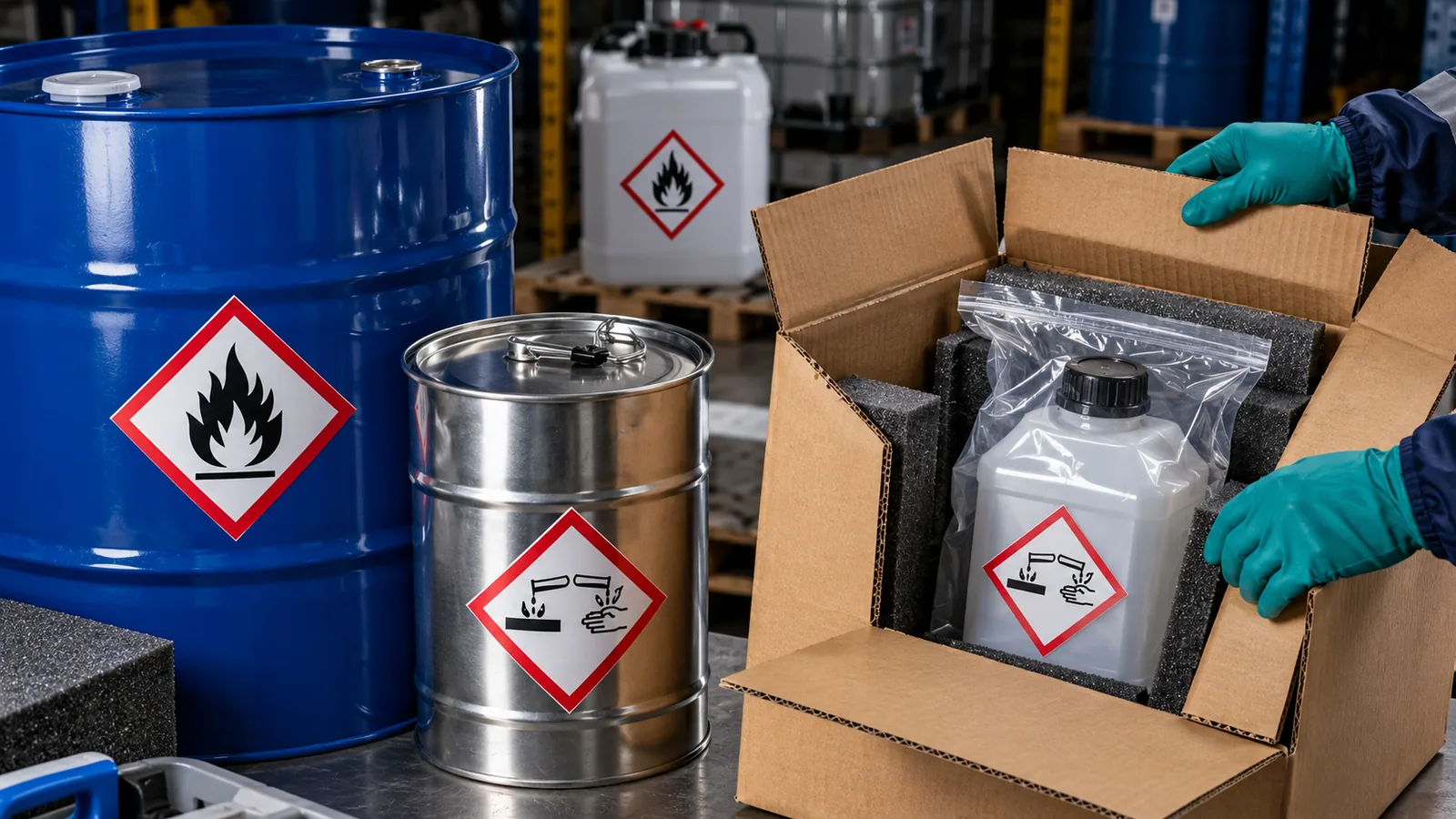
Finally, California maintains some of the most stringent requirements in the country for the storage and transport of hazardous materials, which is an everyday reality for the chemical, coatings, automotive, and industrial businesses that make up so much of the state's manufacturing base.
What this means for buyers: getting the container wrong isn't an option when the contents are regulated. UN-rated packaging has to match both the material inside and the mode of transport, and the certification behind a container is only as good as the testing that supports it. If you ship regulated materials, verifying that your drums, pails, and bulk containers carry the right ratings is not a step to skip.
What to do now
None of these rules can be managed at the last minute. A short audit of your packaging program will tell you where your exposure is:
- Confirm your SB 54 status. Determine whether you're a covered producer, which compliance pathway applies, and whether your registration is current.
- Review your labels against the new Prop 65 rules. Identify which products use short-form warnings and plan artwork updates well ahead of the January 2028 deadline.
- Re-examine your material choices. Weigh recyclability and recycled content alongside cost, especially for single-use formats affected by SB 54's 2032 targets.
- Verify your container certifications. For any regulated contents, confirm that your 55 gallon drums, poly drums, IBC totes, and pails carry the correct UN ratings and that the testing behind them is documented.
- Pressure-test your lead times. Rules shift, and so does demand. Know how quickly your supplier can pivot you to a different container format or size if a compliance requirement forces a change.
Where a packaging partner comes in
The businesses that navigate this environment most smoothly tend to share one thing: a packaging partner close enough to respond quickly and knowledgeable enough to flag issues before they become problems.
That's the role Rhino Container, a Novvia Group company, plays for businesses across the West. Founded in 1992, Rhino is one of the largest distributors of plastic, metal, tin, and hybrid containers in the Western U.S., operating seven warehouse locations across California and the Pacific Northwest totaling more than 450,000 square feet. Four of those facilities are located in California: the Chino headquarters and Cerritos in Southern California, along with Sacramento and Tracy in Northern California. Rhino also operates warehouses in Portland, Oregon; Puyallup, Washington, serving the Seattle area; and South Jordan, Utah, serving the Salt Lake City area.
That in-state footprint matters when requirements shift. Rhino stocks a full line of containers, from 5 gallon buckets and open top pails to 55 gallon steel drums, poly drums, and 330-gallon IBC totes, all positioned near the ports, freight corridors, and industrial centers where California's manufacturers operate. When a filler needs pails this week, or a processor needs to pivot from a 55 gallon drum to an IBC tank, the answer is a short truck run away, not a cross-country freight lane.
On the compliance side, Rhino offers UN-rated packaging systems in plastic and metal, along with specialized solutions for batteries, fireworks, and special permit applications. Through its sister Novvia Group company, C.L. Smith, Rhino provides performance testing to verify packaging meets stringent safety standards, and offers safety training for navigating hazardous material regulations. As part of Novvia Group, Rhino pairs its California roots with a national network of 50+ locations and 800+ packaging experts.
If your business ships into or out of California, now is a good time to pressure-test your packaging supply chain against the rules above. Whether you handle that review internally or with a partner, the goal is the same: fewer surprises, and more confidence that your packaging is ready for what's coming. If you need help comparing compliant container options, talk to a Novvia packaging expert.
Frequently Asked Questions
What containers does Rhino Container stock in California?
Rhino stocks a full line of plastic, metal, tin, and hybrid containers across its California and Pacific Northwest warehouses, from ounce bottles up to 330-gallon totes. Popular in-stock formats include 5 gallon buckets, open top pails, 55 gallon drums, IBC totes, plastic barrels, fiber drums, glass bottles, and closures.
Where can I buy a 55 gallon drum in California?
Rhino Container distributes 55 gallon steel drums, 55 gallon plastic drums, poly drums, and fiber drums through seven warehouse locations across the West. Four are in California: Chino and Cerritos in Southern California, and Sacramento and Tracy in Northern California. The remaining locations are Portland, Oregon; Puyallup, Washington, serving the Seattle area; and South Jordan, Utah, serving the Salt Lake City area. Because inventory is stocked throughout the region, orders reach California manufacturers without long cross-country freight lanes.
Does Rhino Container sell IBC totes and intermediate bulk containers?
Yes. Rhino stocks IBC totes and intermediate bulk containers for bulk liquid storage and transport, alongside metal drums, poly drums, and tight head containers. For regulated contents, UN-rated bulk options are available.
What's the difference between a 5 gallon bucket and a pail?
The terms are often used interchangeably. In packaging, a "pail" typically refers to an open top container with a handle, and a 5 gallon bucket is one of the most common pail sizes. Rhino stocks open top pails in a range of sizes, including 5 gallon buckets with lids, in both plastic and metal.
Does Rhino Container offer UN-rated packaging for hazardous materials?
Yes. Rhino offers UN-rated packaging systems in plastic and metal, plus specialized solutions for batteries, fireworks, and special permit applications. Through its sister Novvia Group company, C.L. Smith, Rhino also provides performance testing and safety training for navigating hazardous material regulations.
Is Rhino Container part of Novvia Group?
Yes. Rhino Container is a Novvia Group company, which pairs Rhino's California footprint with a national packaging network of 50+ locations, 800+ packaging experts, and a family of specialist brands.