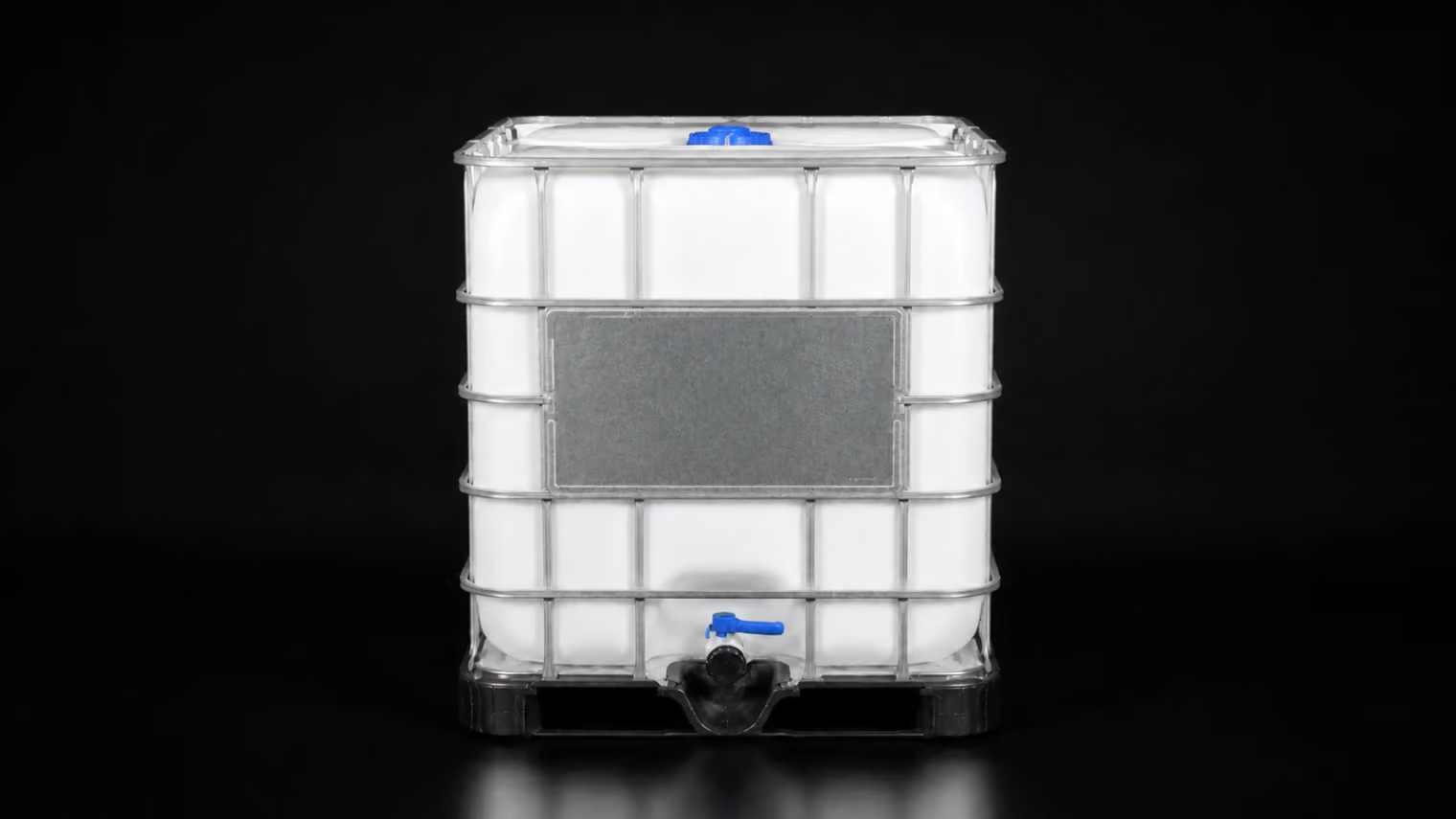
We stock 275- and 330 gallon IBC totes — new, rebottled, or fully reconditioned — plus the valves, caps, and fittings to go with them. Send us your spec sheet or SDS and we'll match you to the right tote the first time.
UPDATED JUL 2026
9 MIN READ

Danielle Thomas
The IBC tote you picture — a translucent plastic bottle in a steel cage on a pallet — is technically a composite IBC. That word matters, because it means the tote is three components that are bought, rated, and replaced separately: an HDPE inner receptacle, a galvanized steel outer cage with an integrated pallet base, and the valve and cap hardware.
Almost every spec mistake traces back to treating it as one object. The bottle is the only part your product ever touches, so it owns every compatibility and food-grade question. The cage carries the load and takes the forklift hits. The valve decides whether your fill line runs smoothly or your operators curse your name. Spec them separately and the tote gets cheaper and better at the same time.
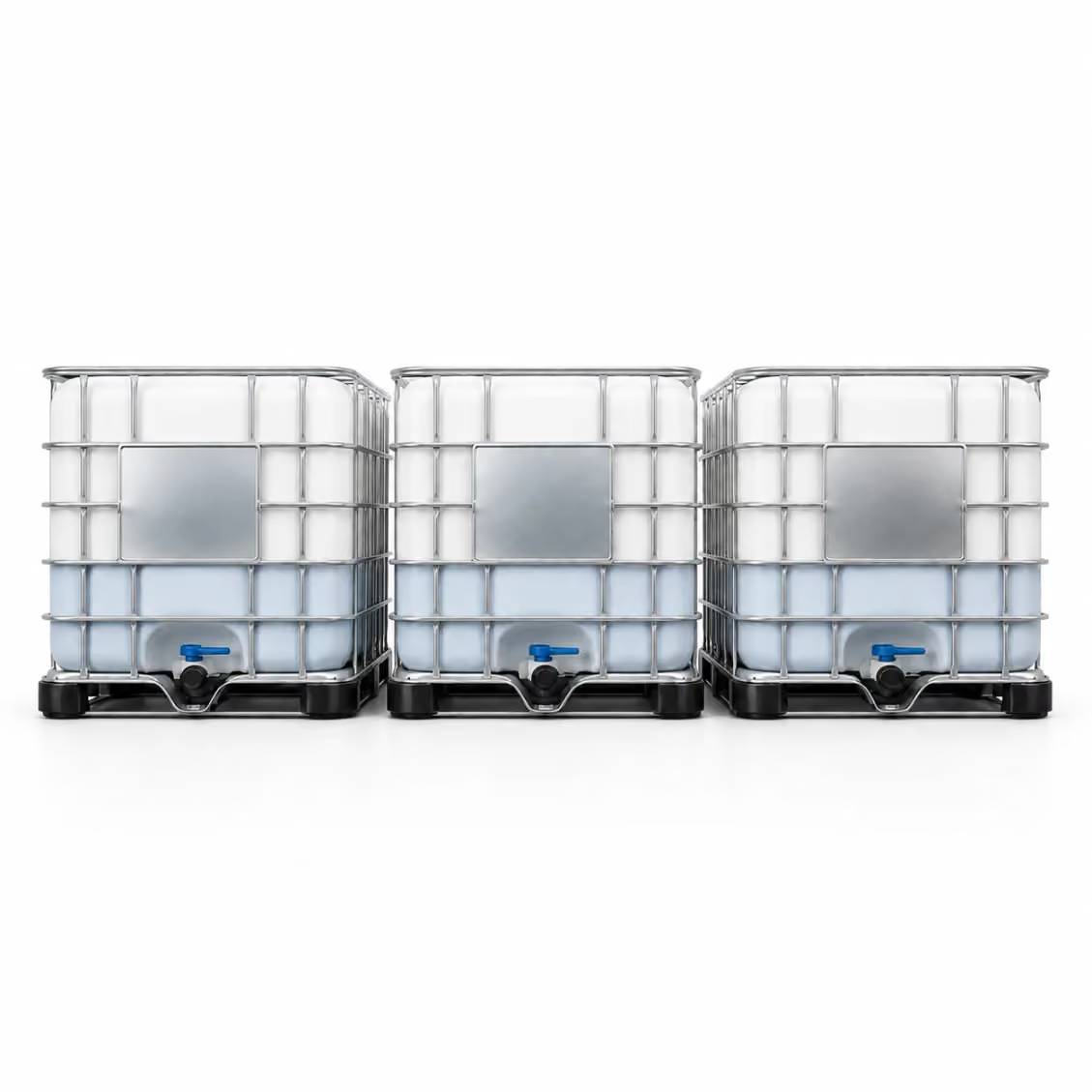
This one is worth its own heading because it costs people money and, occasionally, a violation. The federal standard for composite IBCs is explicit: the outer packaging protects the inner receptacle from physical damage, but it is not required to perform the secondary containment function. The regulation is equally blunt in the other direction — the inner receptacle is not intended to contain anything without the outer packaging.
Read that as a pair and two things follow:
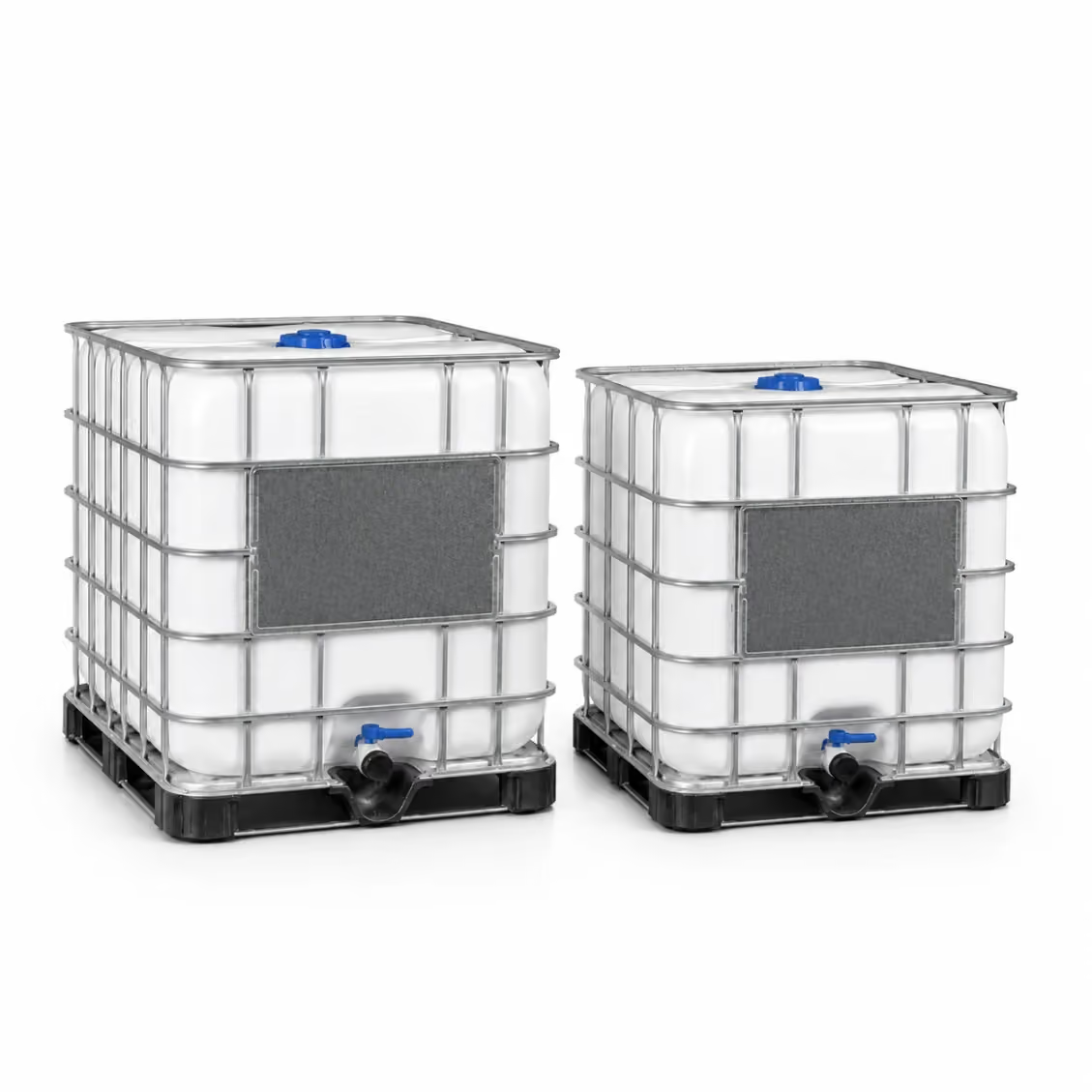
Rhino stocks both, in natural. They share the same standard pallet footprint; the 330 is simply taller. So the choice almost never comes down to floor space — it comes down to what your product weighs.
The rule of thumb: dense products spec down, light products spec up.
The number that decides it
Specific gravity. Every UN-rated tote is tested and marked for a maximum specific gravity and a maximum gross mass. Those are not suggestions — a product denser than the tote's rating is an over-fill even when there's headroom left in the bottle. Check your SDS for density first, capacity second.
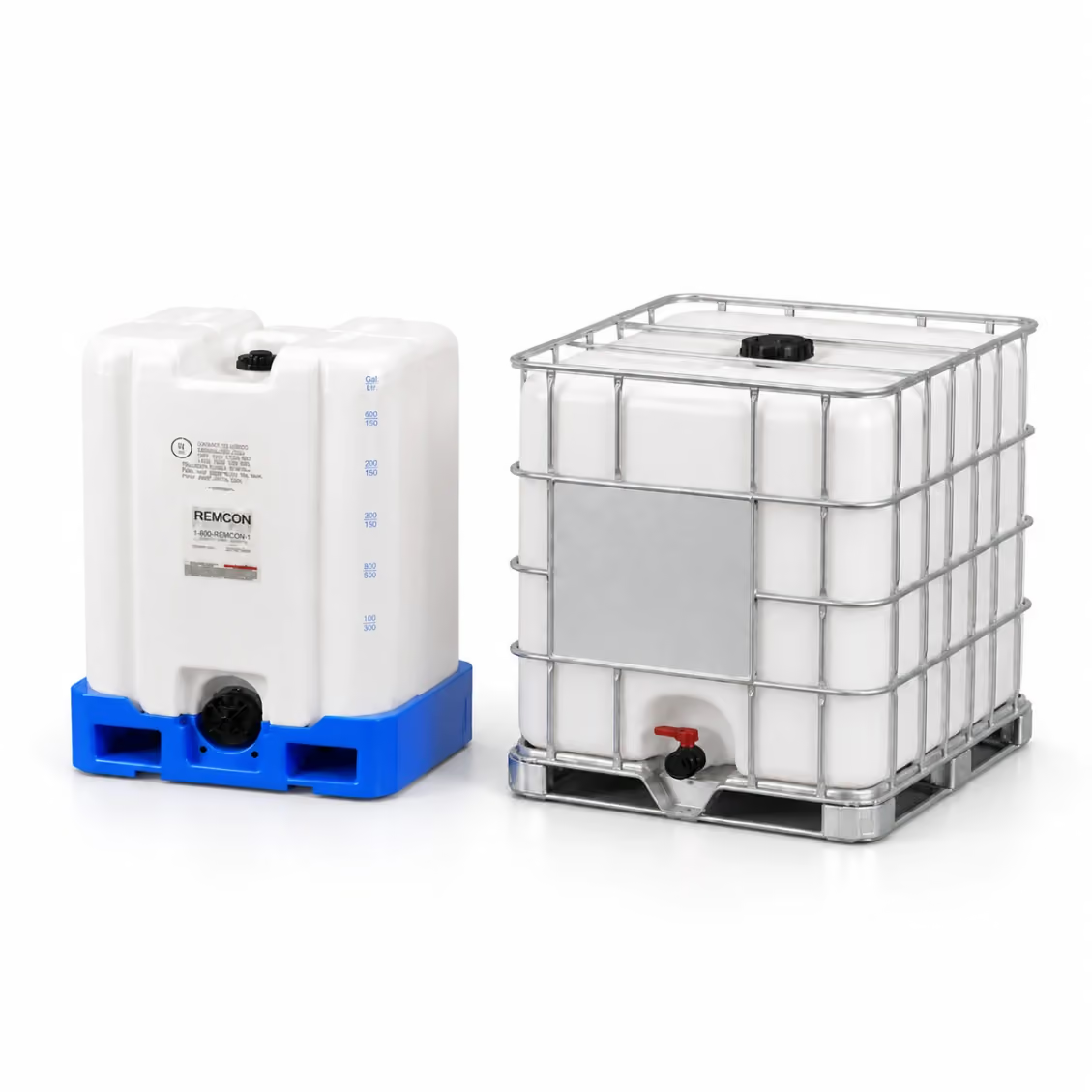
Because the tote is three parts, it's sold in three builds — and the middle one is the one most buyers don't know to ask for. Rhino carries all three: new bottle, valve, and cage; new bottle and valve in a reconditioned cage; or a fully reconditioned bottle, valve, and cage.
Replacing the bottle isn't a workaround, by the way — it's written into the regulations. Damaged composite IBCs may have their inner receptacles replaced and be returned to service, provided the rebuilt tote matches the original design type, passes leakproofness testing, clears inspection, and gets durably marked by whoever did the work.
Watch out for
Prior contents — the whole reconditioned question in two words. A washed bottle is clean, not sterile, and HDPE can retain trace residue of what it held before; never put food, pharma, or reactive chemistry into a bottle whose history you can't document. Remaining life — you're buying into an existing test clock, so ask what's left on it. Cage variation — recovered cages come from several original manufacturers, so if your racking or automation is dimensionally fussy, say so when you order.
A UN-rated composite tote for liquids reads 31HA1, and each character earns its place:
So a 31HA1 is a rigid plastic bottle in a steel cage, rated for liquids — which is exactly the tote everyone means when they say “IBC.” The marking continues with the packing group, the specific gravity it was tested to, the test pressure, the year and month of manufacture, and the country of certification. Everything you need to know whether the tote in front of you is legal for your product is stamped on it.
1. No IBC may be filled with a Packing Group I liquid. Not composite, not metal, not any of them. If your SDS says PG I, you are back to drums and there's no argument to have. PG I solids are allowed with capacity limits — composite IBCs cap at 1.5 cubic meters for those.
2. A PG II tote can carry PG III product — with room to spare. A tote tested and marked for PG II liquids may be filled with a PG III liquid up to 1.5 times its marked maximum gross mass, as long as it still meets every performance criterion at that weight. Worth knowing before you buy a second SKU you don't need.
3. Flammables aren't banned — but static is regulated. When an IBC carries liquids with a closed-cup flash point of 60 °C (140 °F) or lower, or powders that can form an explosive dust, you must take measures during loading and unloading to prevent a dangerous electrostatic discharge. Bonding and grounding procedures are the point here, not the container alone. Your fire code and NFPA 30 will also have opinions about storage quantities and locations, and those are usually the binding constraint.
4. An out-of-date tote is out of service. A specification IBC whose periodic retest or inspection is past due may not be filled and offered for transport. Not “should not” — may not. The dates are marked on the tote, and this is the easiest violation in the business to walk into by accident.
For hazmat service, a tote lives on two intervals. Every 2.5 years: a leakproofness test (also required before first use) and an external visual inspection. Every five years: an internal inspection for cracks, warpage, corrosion, and anything else that would make the tote unsafe. Both clocks start at the date of manufacture — or at the date of a qualifying repair, which is one of the underrated advantages of a properly rebottled tote.
Now the myth. You will hear that plastic IBCs “expire” five years after manufacture. That is true — internationally. The IATA Dangerous Goods Regulations and the IMDG Code limit the term of use for rigid plastic and composite IBCs with plastic inner receptacles to five years from the date of manufacture. The DOT hazardous materials regulations contain no such term-of-use limit at all.
Which means the honest answer to “how long can I use this tote?” is a question: where is it going? Domestic ground freight, and a well-maintained tote that passes its tests can keep working. Air or ocean export, and the five-year mark is a hard stop regardless of condition. Shippers who do both need to track it per tote — which is why the month and year of manufacture are on the marking in the first place.
The valve is the cheapest component and the one that generates the most complaints. Rhino stocks 2″ NPT, ball, and butterfly valves, plus the 6″ fill cap up top — and the differences are real. Ball valves seal hard and last, which is what you want on thin liquids and anything you'd rather not find on the floor. Butterfly valves clear faster and handle viscous product without a fight. The 2″ NPT outlet is the connection most pumps, wands, and hose kits expect to find.
Get it wrong and the tote is fine but the operation isn't: slow dispense, weeping seals, or an adapter hunt at every fill station. Tell your supplier what's on the other end of the hose. It costs nothing to get right at the order stage and it's a nuisance forever if you don't.
The comparison that actually moves the needle. A 330-gallon tote holds what six 55-gallon drums hold; a 275 replaces five. That's one pallet position instead of one, one connection instead of six, one label set instead of six, and one thing to move instead of six.
Drums still win in three places, and they're worth naming honestly: PG I liquids, where the tote isn't legal; flammables and solvents, where steel and a smaller unit of loss are usually the safer and simpler call; and smaller or mixed runs, where 275 gallons of one product is more commitment than you want. If you're running a full pallet of drums to a single fill point, though, the tote math is already in your favor.
If you're not sure — and density, packing group, and flash point are exactly the kind of thing worth a second opinion — send the spec sheet or SDS to a bulk packaging supplier and let them run it. Rhino Container's hazmat team handles UN-rated and special-permit packaging, with performance testing through sister company C.L. Smith. That's the conversation to have before you order, not after a shipment gets rejected.
We stock 275- and 330 gallon IBC totes — new, rebottled, or fully reconditioned — plus the valves, caps, and fittings to go with them. Send us your spec sheet or SDS and we'll match you to the right tote the first time.